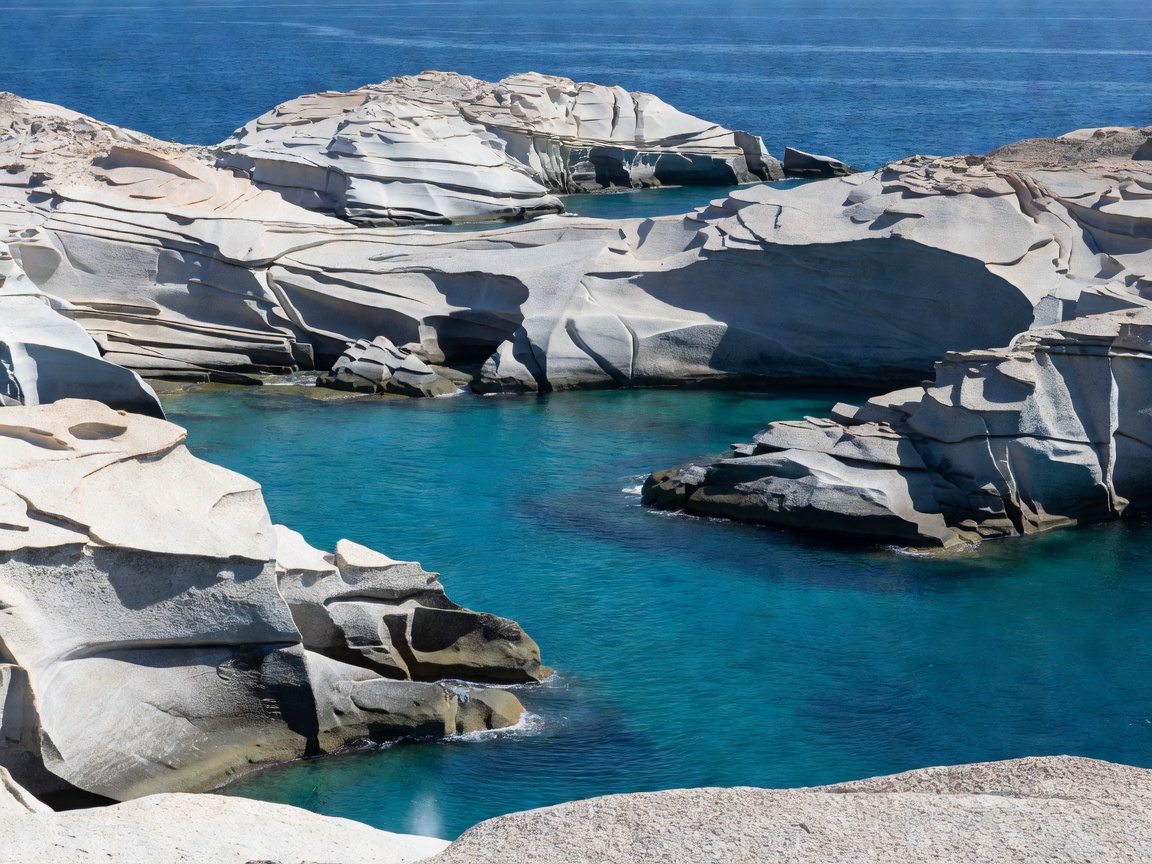
Volcanic Genesis and Mining Heritage
Situated at the southwestern arc of the South Aegean Volcanic Arc, Milos is an island forged through explosive hydrothermal activity, submarine volcanism, and millions of years of chemical precipitation. Unlike the arid limestone character common to many Aegean islands, Milos is celebrated for its extraordinary mineral wealth: since the Neolithic period, the island was the primary Mediterranean supplier of black volcanic glass (obsidian) for razor-sharp cutting tools. In modern times, it remains one of the planet’s foremost mining centers for bentonite, perlite, and pozzolana.
This geological heritage manifests as an astonishing coastal palette: pure bone-white volcanic tuff, cadmium-yellow sulfur veins, crimson iron cliffs, and pale sea-green hydrothermal clay banks. To understand Milos is to view its coastlines not merely as leisure beaches, but as open-air exposures of active marine geology.
Sarakiniko: The Lunar Diatomite Coast
Located on the northern coast facing the open Aegean, Sarakiniko is the most internationally recognized geological landmark on Milos. The site consists of brilliant, snow-white diatomaceous tuff and volcanic ash beds laid down during submarine eruptions and subsequently raised above sea level by tectonic uplift. Over millennia, the relentless force of northern winds (the Meltemi) and crashing winter waves carved smooth curvilinear plateaus, ravines, and natural sea arches entirely devoid of vegetation.
Visiting Sarakiniko requires careful tactical timing. During midday hours under peak summer sunlight, the blinding white stone reflects intense ultraviolet radiation, creating severe heat and glare. Arrive at dawn when early morning rays wash the chalk slopes in soft rose and amber tones, or visit in late evening under moonlight when the bleached formations evoke an alien lunar terrain. Footwear with rubber grip is essential, as the fine ash dust can reduce traction along cliff drop-offs.
Syrmata Architecture: Klima and Mandrakia
Alongside its natural mineral coastlines, Milos possesses an architectural form unique to the Western Cyclades: the syrma (plural: syrmata). In seaside settlements like Klima, Mandrakia, and Firopotamos, two-story stone houses are built directly at the water’s edge. The ground floor consists of an arched cavern or reinforced stone chamber secured with brightly painted wooden doors in vibrant red, turquoise, and mustard tones.
These lower chambers were engineered as winter dry-docks: fishermen used wooden rollers and winches to pull their wooden fishing boats up from the sea into the garage to shield them from destructive winter storms. The upper level contained modest residential living quarters. Today, while many syrmata have transitioned to heritage vacation rentals, they retain their tight nautical footprint and direct contact with the tide.
Comparative Coastal Access: Road Transit vs. Marine Charter
Road Exploration (Car or Small 4x4)
- Direct access to northern and southern beaches (Sarakiniko, Firiplaka, Paleochori, Pollonia).
- Freedom to dine in traditional inland hill towns such as Plaka and Trypiti.
- Affordable day-to-day autonomy across paved central island routes.
- Western wilderness sector (halakas) is strictly unpaved, void of mobile signal and vehicle recovery.
Marine Sailing Charter (Kleftiko & Sykia)
- Exclusive access to Kleftiko’s pirate sea arches and the roofless sea cave of Sykia.
- Provides offshore perspective of polychromatic volcanic cliff layers inaccessible by foot.
- Includes snorkeling in transparent deep-water marine canyons and hidden passages.
- Subject to immediate weather cancellation if northern Meltemi winds exceed safe knot thresholds.
Practical Navigation and Marine Logistics
The ferry port of Adamas acts as the primary transit and commercial hub of Milos, hosting ferry links from Piraeus and sister Cycladic islands. For accommodation, travelers seeking romantic elevated sunsets and sunset tavernas prefer the cliff-top capital of Plaka, while those prioritizing flat, quiet waterfront dining with direct access to ferry catamarans to Kimolos choose Pollonia on the northeastern tip.
If planning a boat excursion to Kleftiko, prioritize departures that operate out of the southern bays (such as Kipos or Provatas) on windy days. Leaving from the south coast allows vessels to navigate in the sheltered lee of the island’s southern mountains even when strong northerly winds disrupt boat departures from Adamas harbor.